
Queens Domain
Melbourne, VIC
Melbourne, VIC
Architect: DKO Architecture
Builder: Hacer
Product: ShapeShell™-RT
Area: 20-storey balustrade
Application: Balustrade & Canopy
Responsibility: Design, Engineering & Manufacture of Feature Elements
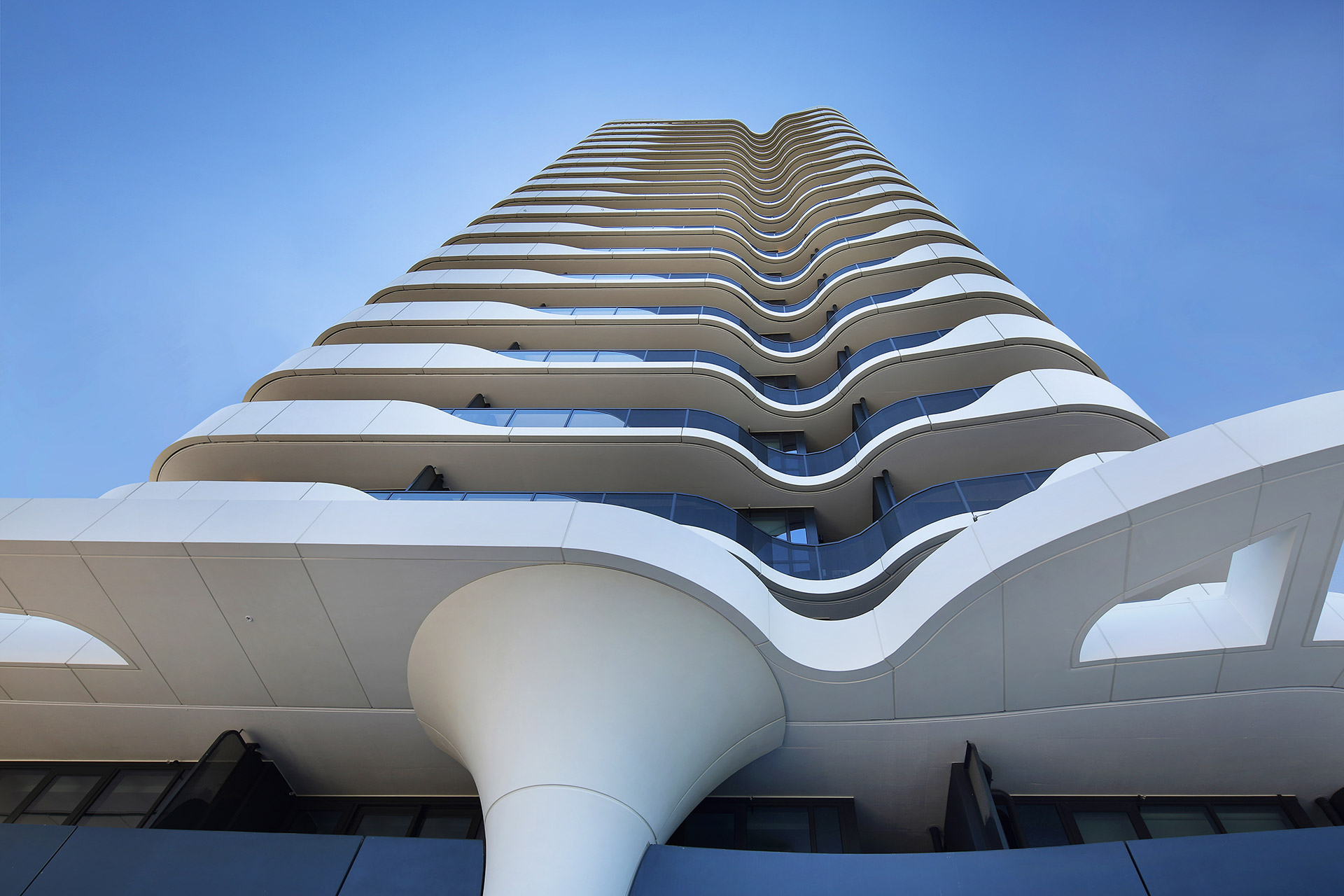
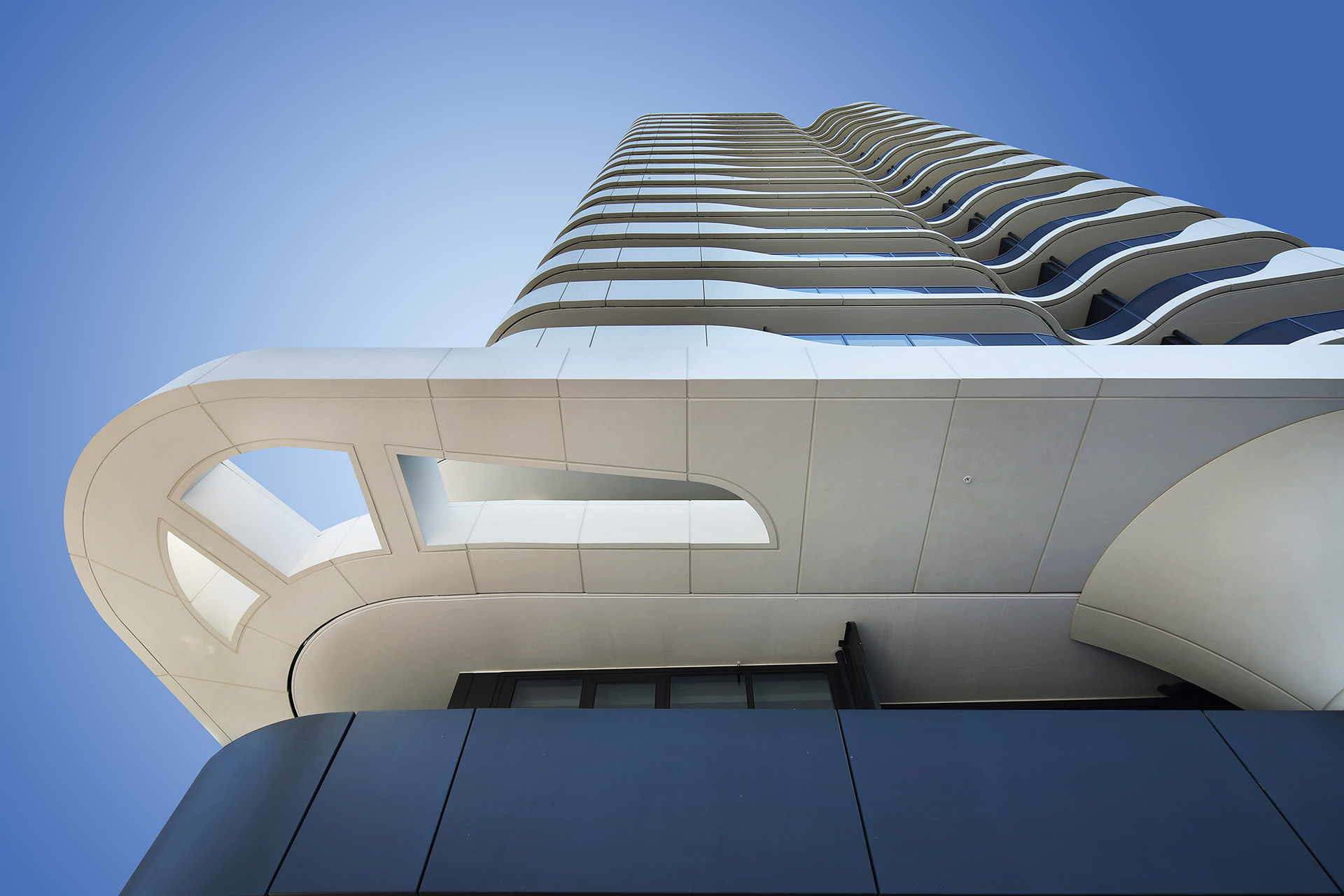
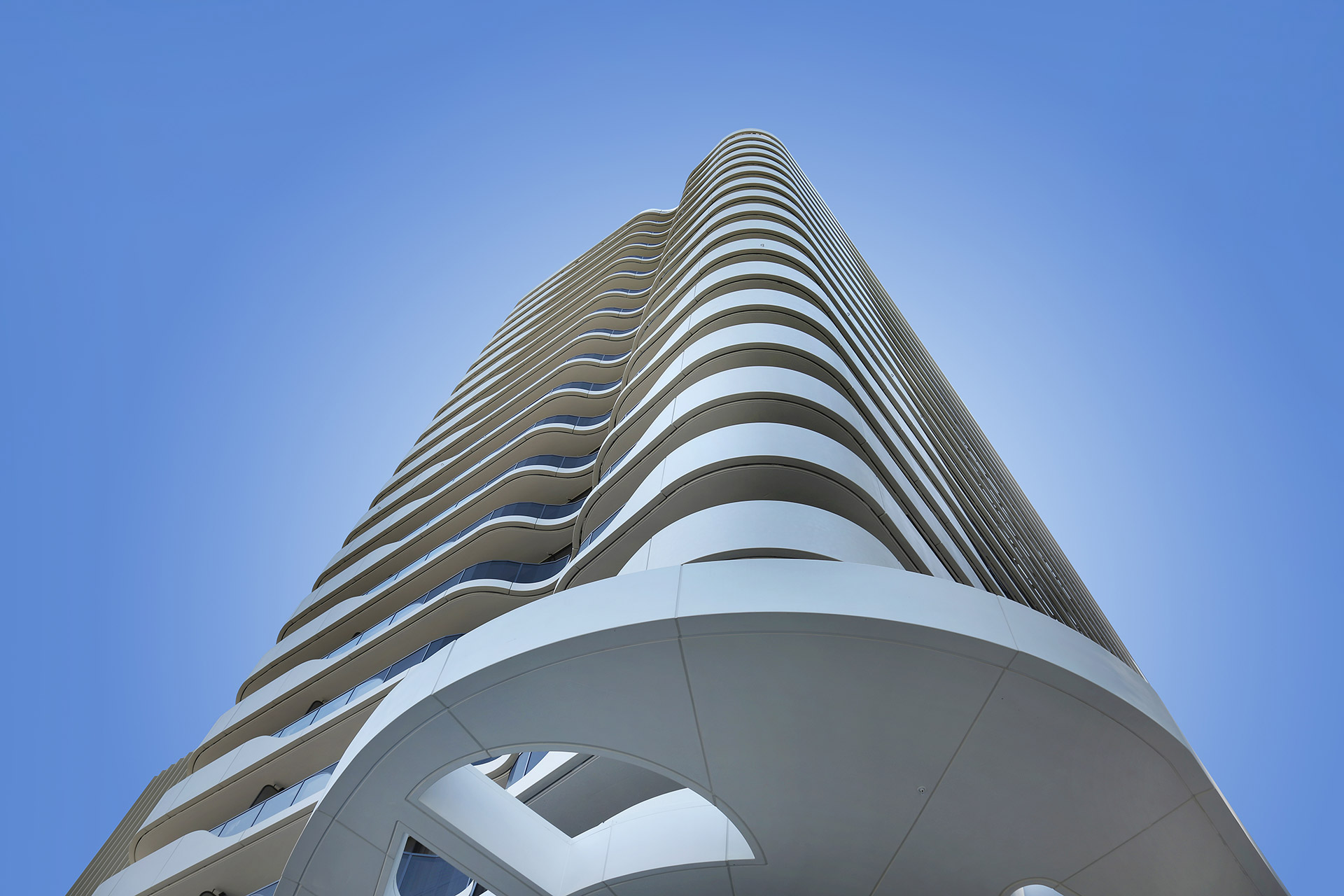
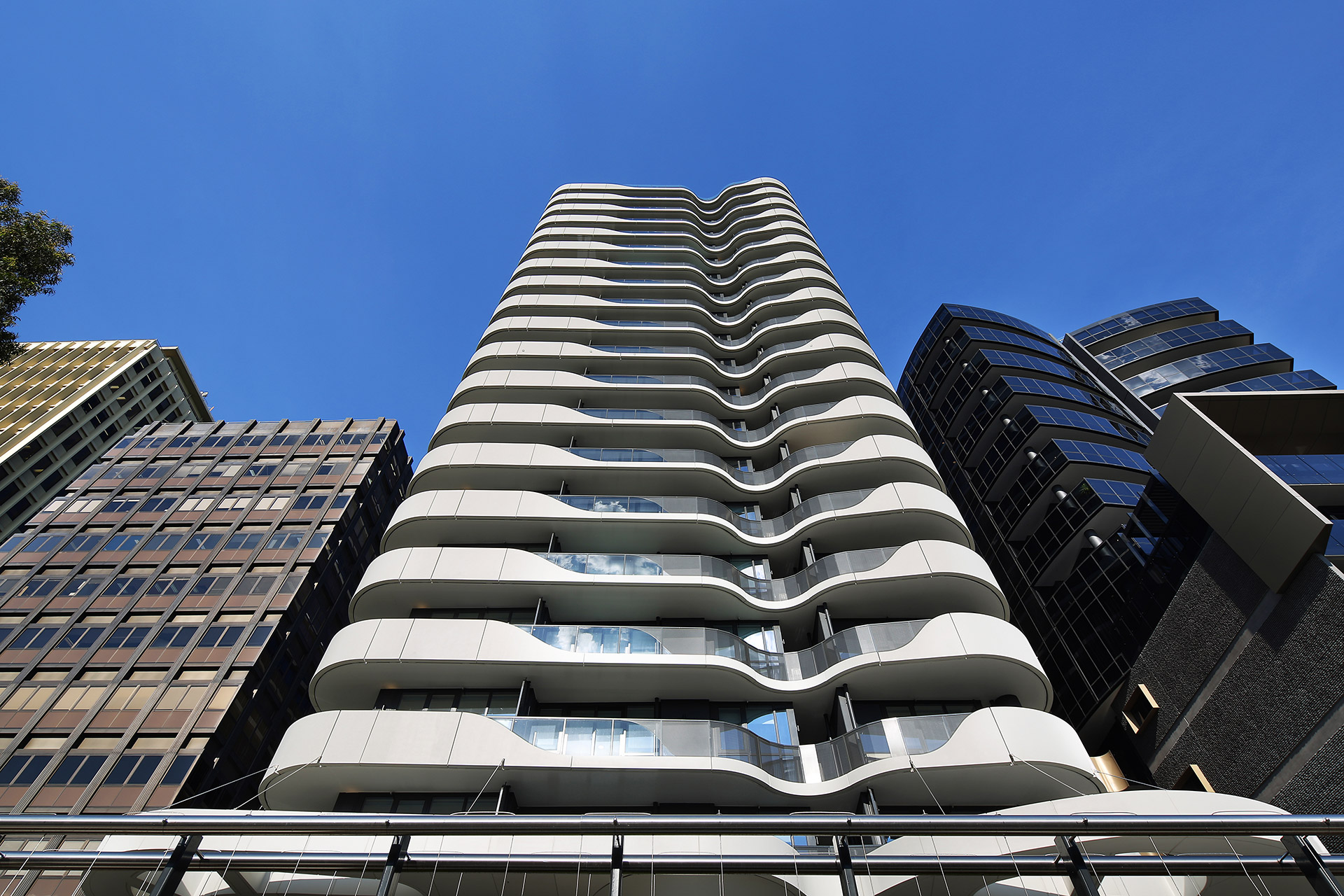
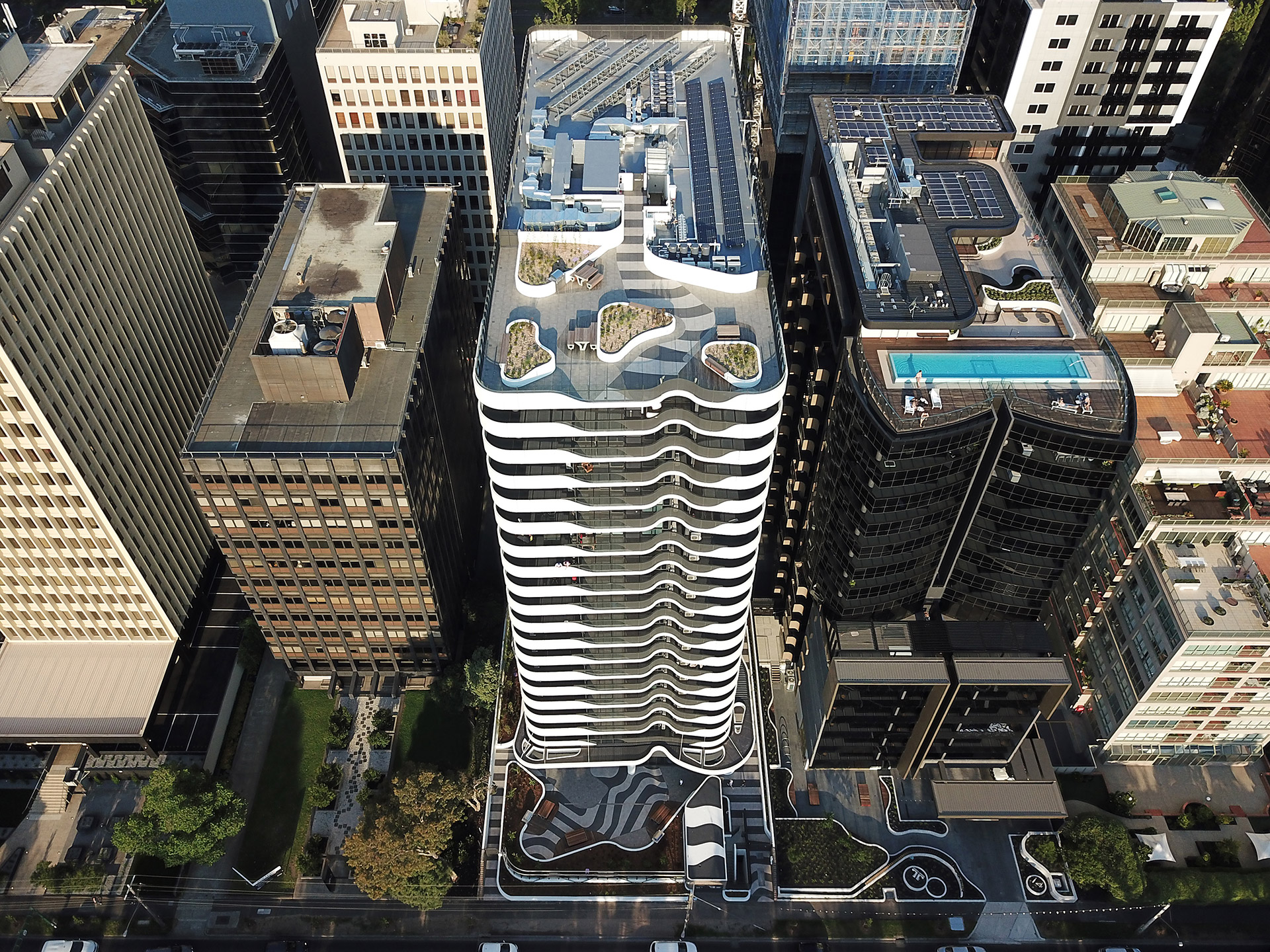
Queens Domain is a 20-storey apartment building in Melbourne. The build incorporated a ShapeShell™-RT balustrading system that swept around the entire perimeter of the building on each level and also some columns wrap and soffit units on the lower levels. ShapeShift technologies completed the design, engineering, project management, and manufacture of the elements.
Across from Albert Park Lake and along the busy Queens Road in Melbourne, Australia, Queens Domain stands wrapped with a unique white balustrade creating a futuristic look.
ShapeShell-RT was chosen for this structure primarily due to the mass-savings and installation benefits it was able to present. As ShapeShift tech was engaged at an early stage, it allowed for collaboration with the structural engineers of the building and allowed the engineering to account for a light-weight slab edge treatment.
In doing so, the initial slab thicknesses was reduced so much so that over the 20-storeys of the building, the building was able to house a whole additional level to remain in the height restrictions. So essentially the penthouse suite paid for the entire balustrading system.
The product was also able to present significant installation benefits. Given the light-weight nature, the balustrade units were installed from the slab edge through use of a simple 500kg winch system. This saved on time and cost.
Queens Domain is a 20-storey apartment building on Queens Road in Melbourne, across from Albert Park Lake. ShapeShift designed, engineered, project managed and manufactured a ShapeShell™-RT balustrade system that sweeps around the entire perimeter of every level, along with column wraps and soffit units on the lower levels. The architect was DKO Architecture and the builder Hacer. The package totalled 6,400 square metres.
This is the clearest example on this site of a cladding decision changing a building rather than just covering it.
ShapeShift was engaged early enough to work with the building structural engineers rather than after the structure was set. Because the slab edge treatment could be designed as a lightweight element from the outset, the engineers were able to account for it in the slab design and reduce the initial slab thicknesses. Over 20 storeys those reductions accumulated into enough height for the building to house a whole additional level and still sit inside its height restriction.
The balustrade paid for itself in floor area. That only happened because the material was chosen before the structure was frozen.
A balustrade sits at the slab edge, which is the point on any floor plate least able to carry load. It is a cantilever off the end of the slab, so mass there drives bending in the slab, which drives slab depth, which drives storey height, which on a height-restricted site drives how many levels the building gets. A heavy perimeter treatment costs floor area, not just tonnage.
A balustrade is also a barrier, not decoration. It has to resist the imposed loads applied to a safety barrier and keep doing so for the life of the building, so it cannot be made light by being made flimsy. And at Queens Domain it sweeps continuously around every level, so the geometry is curved, repeated 20 times over, and on the critical path for every floor.
ShapeShell-RT was selected primarily for the mass savings and the installation benefits. A moulded thermoset composite delivers the curve as manufactured geometry rather than as something bent or faceted on site, and every level receives an identical set of units, so setting out is resolved once and repeated.
Light units change how the work is done. Balustrade installation stops needing craneage on each level and becomes something a small crew can handle, which matters when the same operation repeats on 20 floors and each repetition sits between the structure going up and the floor being finished.
Carrying the same system into column wraps and soffits on the lower levels keeps the podium reading as part of the same building rather than as a different material stopped at level two.
The building is wrapped in white, which is the least forgiving colour on a facade. It shows streaking, it shows any variation between batches, and it shows the age of a paint film. Pigment moulded into the composite rather than applied as a coating removes the paint film from the equation, and there is no embedded steel to corrode on a balustrade that is exposed on all sides at every level.
This project used ShapeShell-RT, our FRP composite system.
Browse all ShapeShift projects, or compare the panel materials in cladding panels compared.