
Victorian Comprehensive Cancer Care Hospital
Melbourne, VIC
Melbourne, VIC
Architect: STHDI+MCR
Builder: Grocon PCL
Product: ShapeShell™-RT
Area: 10,361 sqm
Application: Facade & Colonnade
Responsibility: Design, Engineer & Manufacture of Feature Elements
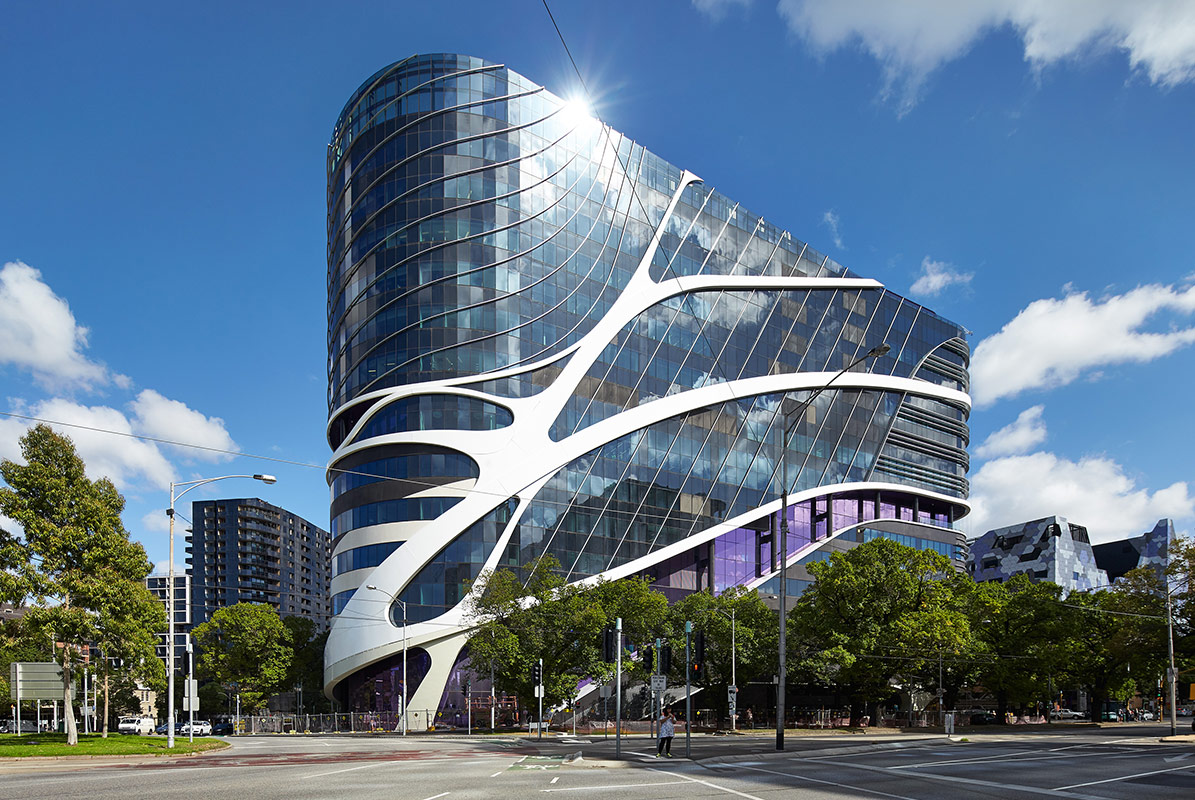
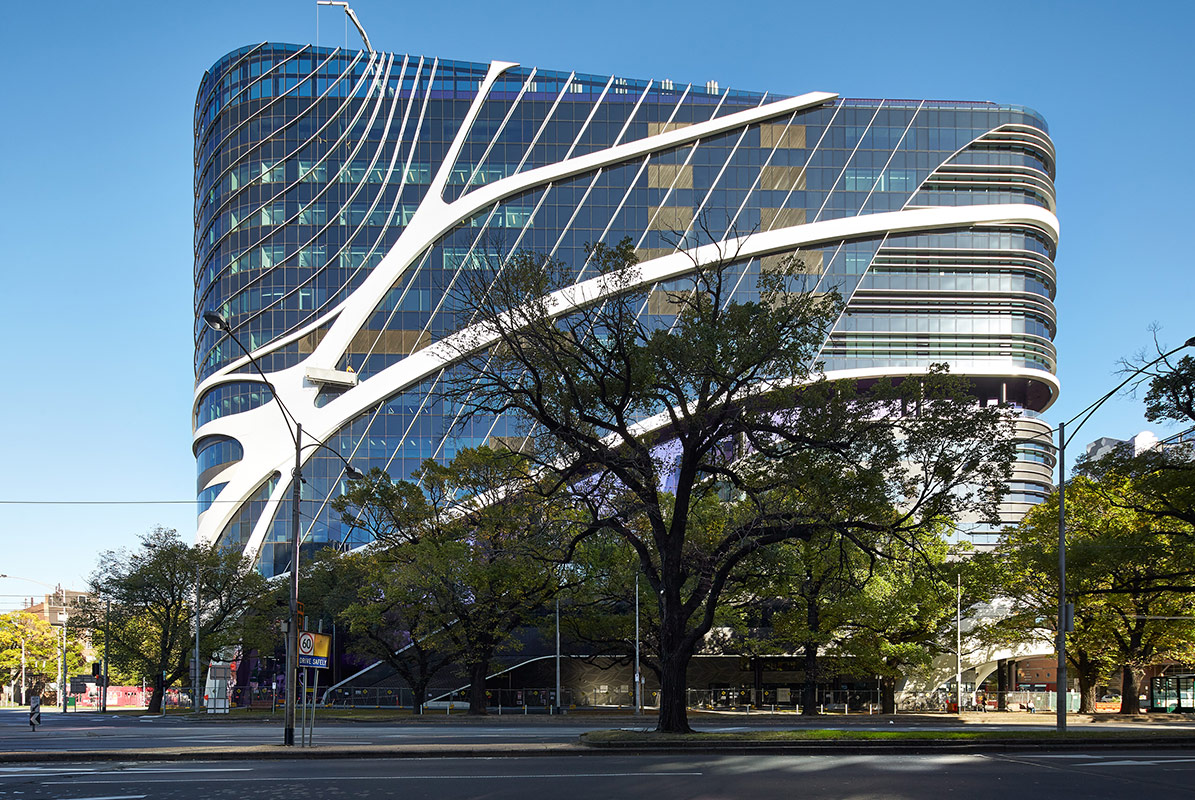
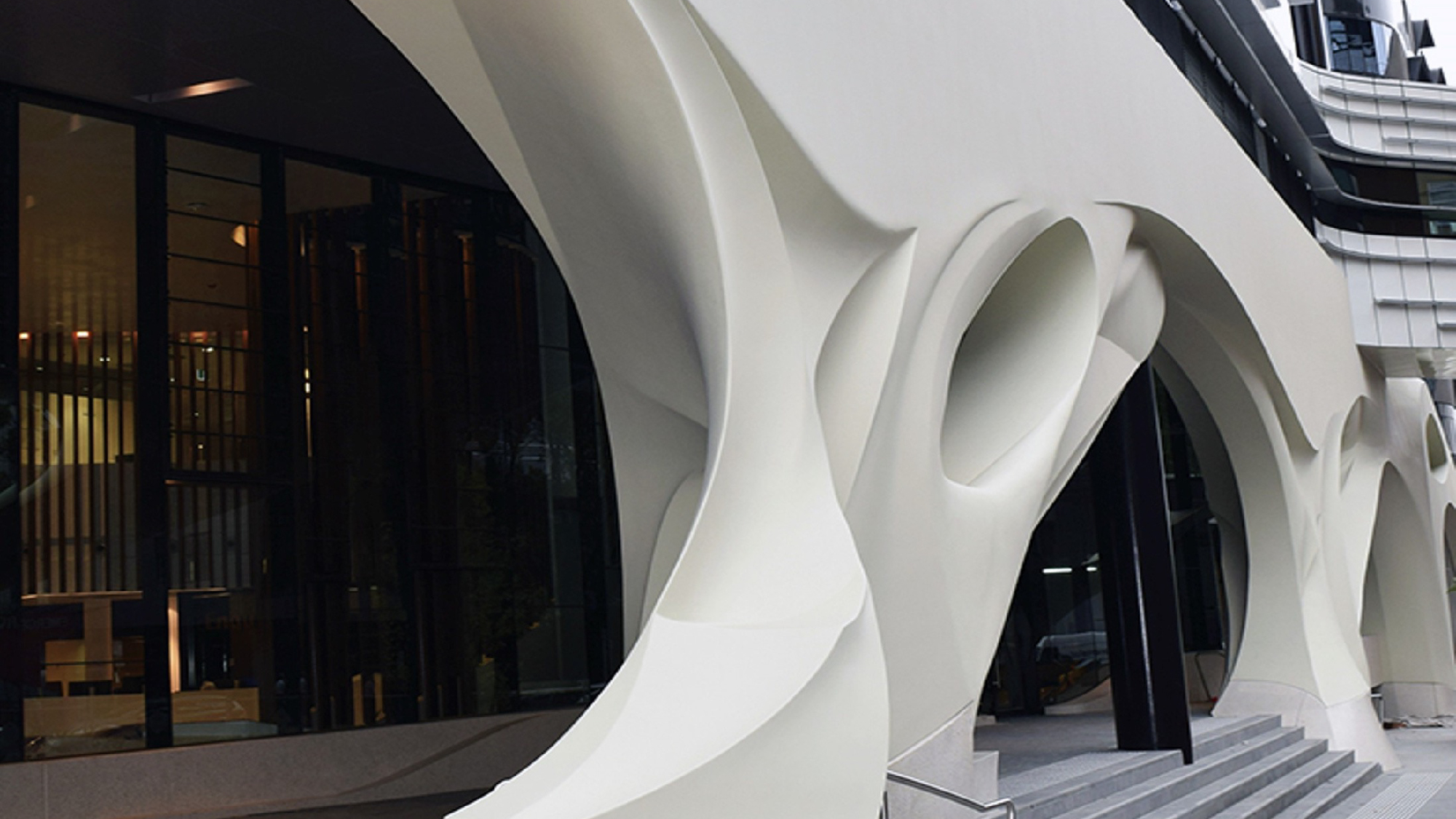
ShapeShift Technologies was involved in the design, engineering, project management, and on-site installation works of the 10,361 sqm façade and colonnade for the Victorian Comprehensive Cancer Centre. The project incorporated two separate areas, the lower organic colonnade and the upper sweeping veins up the building.
This complex project required collaboration with multiple trades and stakeholders to make it successful. In order to deliver the project, ShapeShift Technologies was required to collaborate closely with the glazing consultants and manufacturers in order to integrate the required bracketry to fix the panels to the building.
For facade, we apply large span sweeping shapes wrap around the hospital creating a dramatic and futuristic effect. ShapeShell monocoque was used due to its light weight, yet stiff characteristics. Panels are fixed outside of the curtain wall and span 12 metres between fixings.
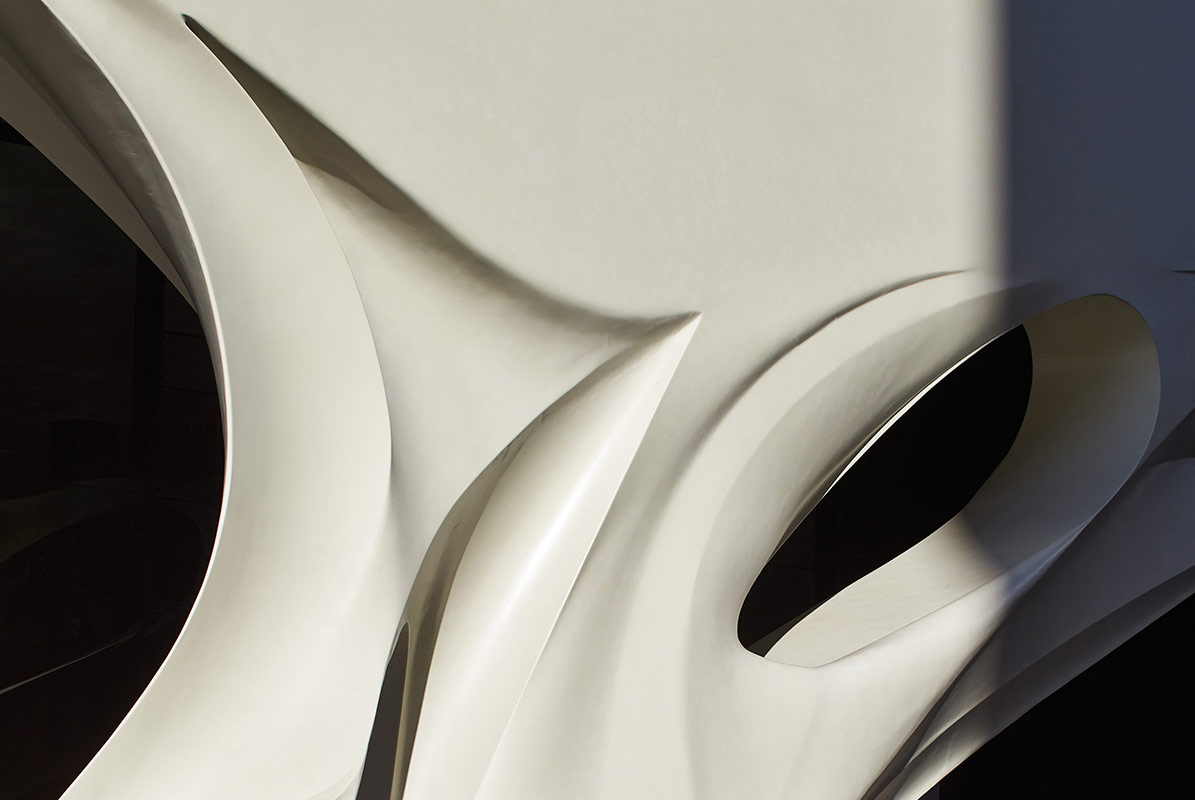
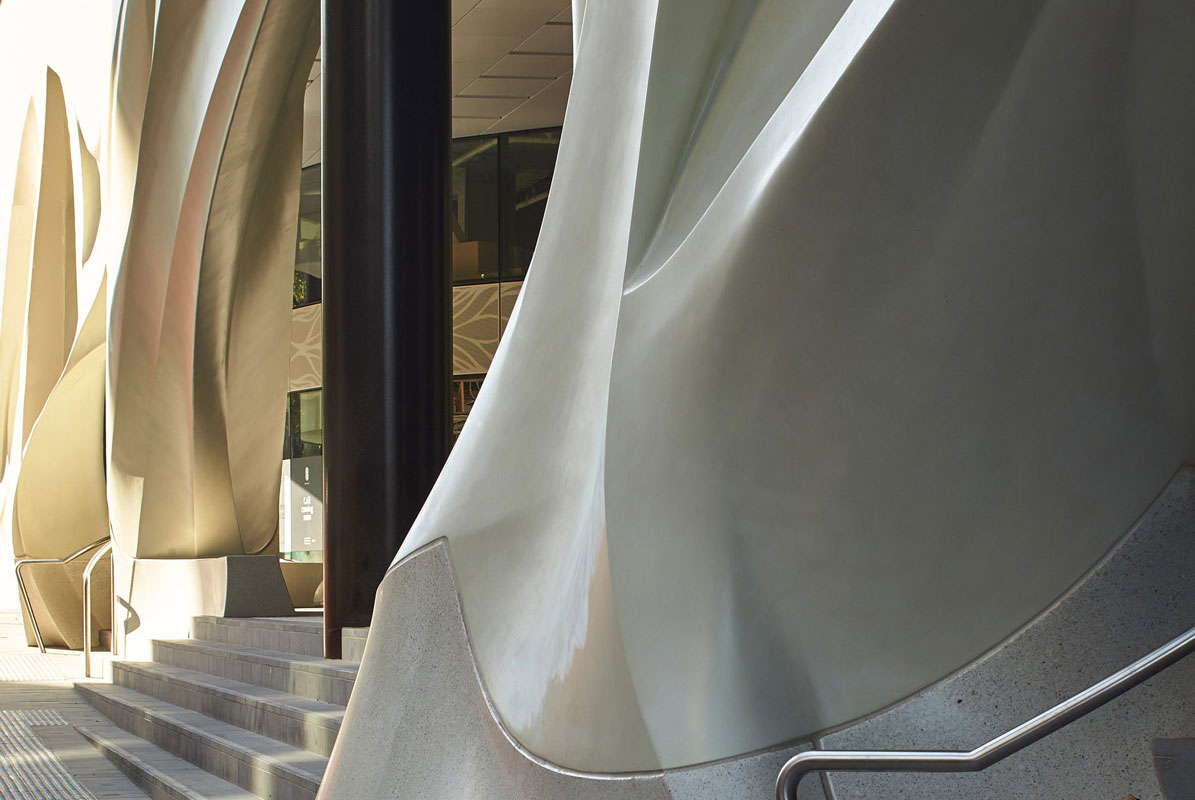
For the colonnade, the highly organic shape of the ground floor colonnade, extending around the full perimeter of the hospital, was a perfect match for ShapeShell single skin as the material is able to take advantage of the natural strength of the complex curved design. A seamless monolithic look was possible thanks to highly accurate 3D digital manufacturing techniques meant minimal section joins. With its cementatious finish incorporated during manufacture, the structure has the look and feel of concrete.
The Victorian Comprehensive Cancer Centre in Melbourne carries a ShapeShell™-RT facade in two distinct parts: an organic colonnade at the lower levels and a set of sweeping veins running up the building above it. ShapeShift delivered the design, engineering, project management and on-site installation. The architect was STHDI+MCR and the builder Grocon PCL.
The colonnade and the veins are different problems. The colonnade is a large, organically curved element at ground level where people walk past it and touch it. The veins are long, sweeping, high-level elements that have to hold a continuous line across many storeys and read as one gesture from the street. They share a material and a language but not a single detail.
The harder constraint was what the panels fix to. On a building of this type the facade is predominantly a glazed system, and a feature element cannot simply be bolted to glazing. The bracketry has to pass through or attach to the curtain wall without compromising its weathertightness, its thermal performance or its warranty, which means it has to be designed jointly rather than specified by one party and accommodated by the other.
ShapeShift worked directly with the glazing consultants and manufacturers to integrate the required bracketry into their system. That is a coordination problem, not a materials problem, and it is the one that decides whether a facade like this can be built as drawn.
Both elements were built as ShapeShell single skin. On a complex curved design that is the efficient answer: the curvature itself provides the stiffness, so the panel does not need a frame behind it to hold its shape or carry its load. Removing that frame removes weight, depth and an entire layer of fixings.
Large span sweeping sections were then used to keep the number of joins down. Accurate 3D digital manufacturing meant the sections met with minimal joins, which is what produces the seamless monolithic appearance the design depends on. A colonnade that reads as a single continuous form loses the effect the moment the joint pattern becomes visible.
The cementitious finish is incorporated during manufacture rather than applied afterwards, so the completed structure has the look and feel of concrete. That was the point: the architecture wanted the mass and materiality of concrete on a geometry that would be extremely difficult and very heavy to achieve in cast concrete, on an operating hospital site.
One clarification matters here, because it is commonly misread. A cementitious finish is a surface treatment. ShapeShell-RT is a glassfibre reinforced thermoset underneath it, which is a polymer composite and not a non-combustible material. Where a facade’s fire performance governs the material selection, the comparable ShapeShift product is GRC, which is cement based throughout. A finish that looks like concrete does not make a panel behave like concrete in a fire, and a GRC fire report must not be carried onto an FRP element.
This project used ShapeShell-RT, our FRP composite system.
Browse all ShapeShift projects, or compare the panel materials in cladding panels compared.