Which standard product for which job
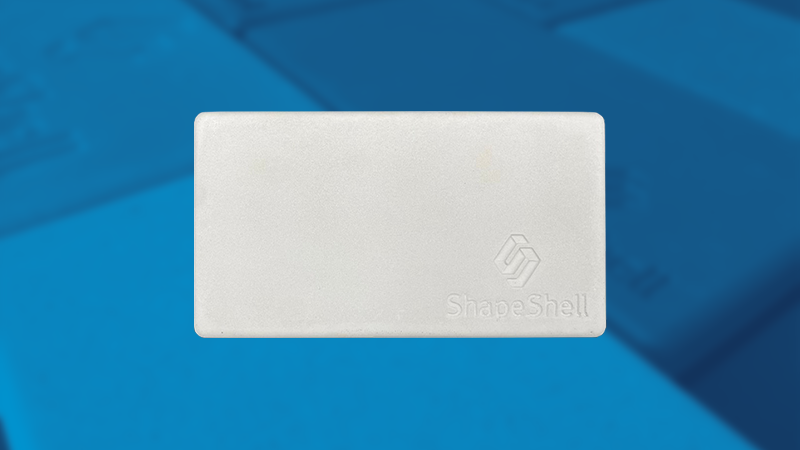
Standard ShapeShell™-RC facade panels. Glass fibre reinforced concrete, known as GRC in Australia and the UK and as GFRC in North America, in stocked panel formats for external walls. Tested to AS/NZS 1530.1 and not deemed combustible, so it is the deemed-to-satisfy answer where the NCC requires a non-combustible external wall. A panel two installers can handle without a crane.
Internal wall cladding. ShapeShell™-RT feature walls and linings for interiors, with customisable colours, textures and panel profiles.
Crystalline silica free kitchen benchtop. A ShapeShell™-RC benchtop engineered to eliminate hazardous crystalline silica dust while keeping the look and durability of a concrete surface.
Decorative pillar and plinth. ShapeShell™-RC pillars and plinths for residential and commercial settings. Lighter than cast concrete or stone, which cuts on-site labour.
Ballistic wall panels. ShapeShell™-RT panels engineered to resist projectile penetration, for critical infrastructure, government and commercial buildings.
What standard means here
Standard products use the same ShapeShell™ substrates as the bespoke work, set into repeatable formats. That is what makes the lead times short and the pricing predictable. The fire performance, the finish options and the attachment systems are the ones described on each product page. What changes against a bespoke commission is the geometry, not the material.
GRC, GFRC and FRP: the names
The panel industry uses different names in different markets. Glass fibre reinforced concrete is GRC in Australia, the UK and the Gulf, and GFRC in North America and much of Asia. ShapeShell™-RC is our GRC (GFRC). ShapeShell™-RT is a fibre reinforced thermoset, the material usually called FRP, and it is the substrate behind the internal cladding and the ballistic panels. The GRC comparison and the FRP comparison set out where each substrate sits against the conventional product.
Made in the same factory as the bespoke work
Every standard product comes out of the same vertically integrated operation as the large architectural commissions: in-house design and engineering, CNC machinery, and a quality management system that has held ISO 9001 accreditation for the last ten years. Output runs at roughly 40,000 sq ft a month and can be scaled with notice. The detail is on the production capabilities page.